Anesthesia Tips,
Tricks & Treasures

From over 30 years of Independent Practice

Anesthesia is both a science and an art. While textbooks provide the foundation, much of what makes an anesthesiologist effective, efficient, and adaptable comes from years of hands-on experience.

Anesthesia Tips, Tricks & Treasures is a collection of practical techniques, clinical insights, and lessons learned over more than 30 years of independent anesthesia practice.

Various text passagesA recurring theme throughout this book is that more anesthesia is not necessarily better anesthesia.
The goal is to provide enough medication to accomplish what is required at each stage of the procedure, without unnecessarily exposing the patient to the adverse effects of additional medication.
Sometimes the best anesthetic technique is simply to give less, but to give it at the right time.
Anesthesia
Tips, Tricks
& Treasures
Sweet Dreams Anesthesia logo: a black medical bag with SDA initials and an anesthesia mask
From over 30 years of
Independent Practice

Illustrative book mockup — cover design undecided

Printed Book · E-book · App

Each version offers a different way
to explore and use the material.

This is being developed in several formats, including a traditional printed book, an e-book, and an interactive application featuring additional resources and practical tools. Explore the boxes below to learn more about each format and its features.

Printed Book

A Practical Reference You Can Hold in Your Hands

A printed book requires no batteries, internet connection, or electronic device. It can sit on a bookshelf, rest on a desk, or be kept nearby as a reference.

PLANNED FOR PUBLICATIONExplore the printed edition →

E-book

Practical Knowledge, Wherever You Go

A searchable text allows readers to quickly locate a particular subject, medication, or technique. An interactive table of contents and internal hyperlinks make it easy to move between sections.

PLANNED FOR RELEASEExplore the e-book edition →

App

More Than a Book — A Practical, Interactive Resource

It transforms selected tables, equations, and reference materials into interactive tools, allowing readers to enter patient-specific information, perform calculations, and explore clinical concepts without leaving the application.

PLANNING & DEVELOPMENTExplore the app edition →

Sample Content

Tips & Tricks

Written for practicing anesthesiologists and those in training, it explores approaches to everyday challenges, shares solutions to problems encountered in the operating room and office-based settings, and offers ideas that may not be found in conventional textbooks.

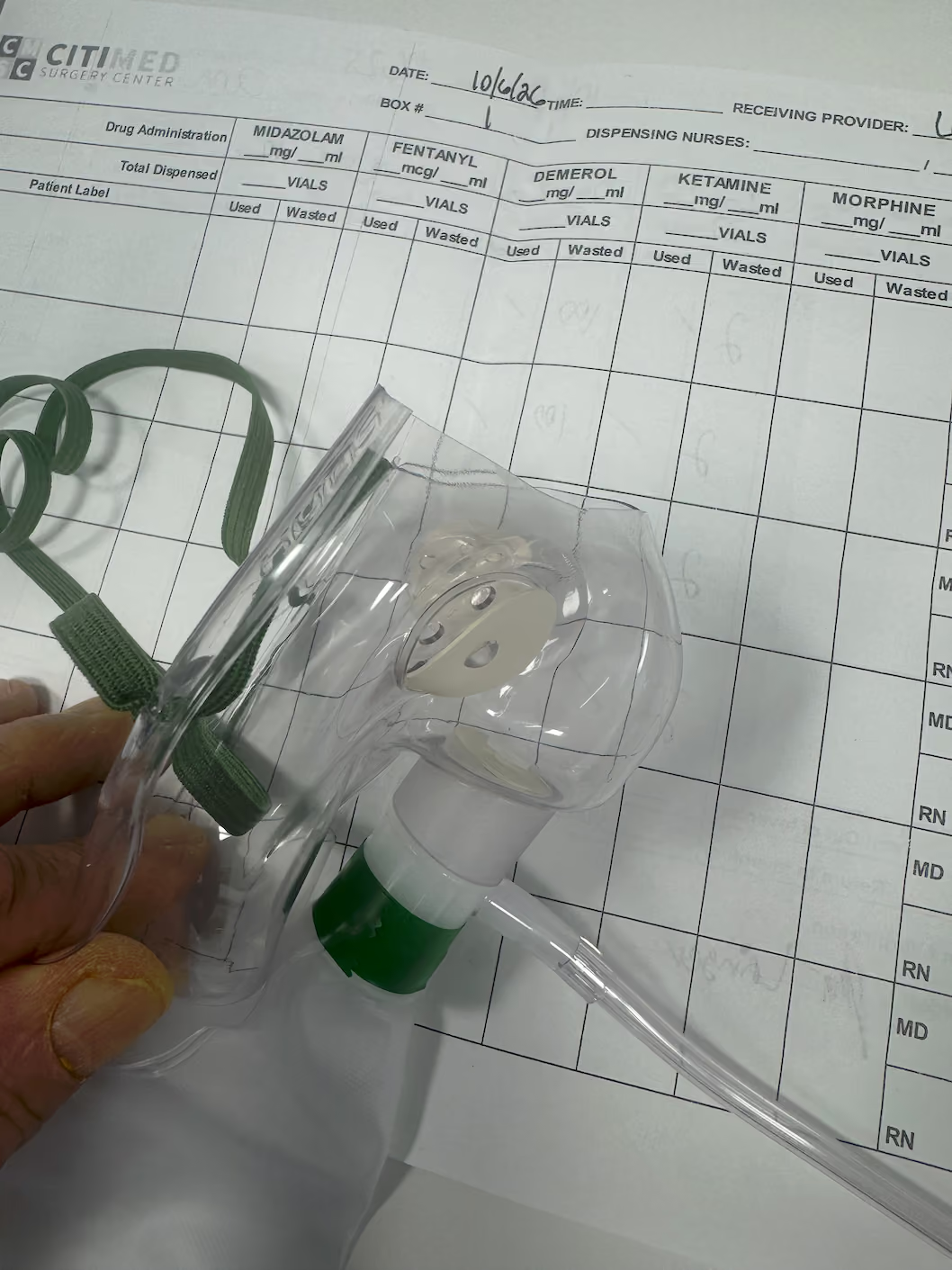
The author’s photograph of a modified oxygen mask

Oxygen mask comfort

In Labor & Delivery we had an issue getting parturients to wear an oxygen mask when "required". Naturally, when breathing heavy during contractions, CO₂ accumulates rapidly making the mask feel constricting and the parturients would remove them.

Read the full passage

By cutting off the top of the mask at about the level of the bridge of the nose, you still create a high O₂ space in front of the mouth & nose, but the open top allows CO₂ to escape easily, making heavy breathing more comfortable, improving compliance & SPO₂. This was published in Anesthesia & Analgesia in 1996.

Simple modification of a medium concentration (Hudson type) oxygen mask improves patient comfort and respiratory monitoring with capnography
Anesth Analg. (1996) Jul;83(1):202. Langer RA

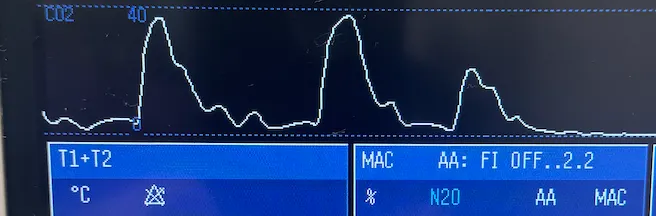
The author’s photograph of a respiratory waveform display

Propofol considerations

Propofol takes about 60 seconds from administration until you can reliably expect to get the maximum effect from the dose you just gave.

Read the full passage

If you watch the end tidal CO₂ wave, when you notice a change from the regular waveform, that is when the propofol is really starting to kick in. I also tell this to my surgeons, so it gives them something to do while they are waiting to start.

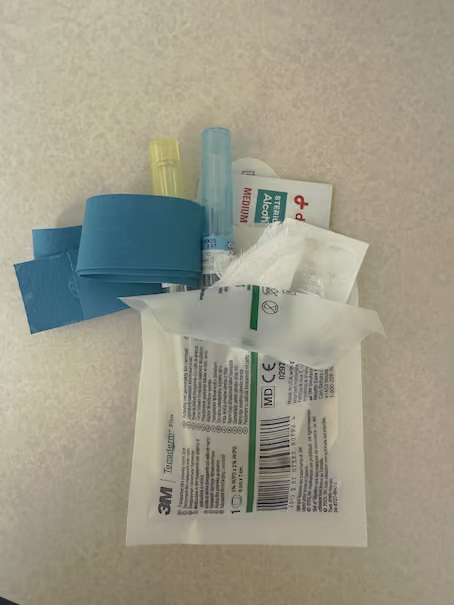
The author’s photograph of a prepared IV placement kit

Easy IV kits

Open a fresh Tegaderm about 1"/2.5 cm, add an alcohol wipe or two, some IV Catheters, a few gauze and a tourniquet to the package to make little IV placement kits in advance.

You can also accumulate the trash inside the empty Tegaderm package. This makes just one neat little package to pick up & toss in the garbage.

The goal is simple: to share what I've learned along the way, in the hope that others will find something useful to incorporate into their own practice.

Robert Langer, MD

About the Author

Robert Langer, MD

I grew up in Los Angeles, California, attended New York Medical College in Valhalla, New York, and trained in Anesthesiology at NYU in the early 1990s under the great Herman Turndorf, MD, one of a small handful of particularly notable anesthesia program directors in that era.

After completing my training, my primary focus became outpatient and non-traditional operating-room settings, including physician offices and ambulatory surgery centers (ASCs). I kept a part-time hospital practice as well, both to provide balance and to keep my hospital-based skills current.

More about the author →
Testimonials & Peer-Reviews

Perspectives from Colleagues and Readers

Manuscript Reviews

I have invited several experienced colleagues to review the manuscript and share their impressions of its content, practical value, and overall approach.

Selected reviews will be shared here as they become available, with the reviewers' permission.

Reader Testimonials

Once the book is published, I hope to share selected comments and experiences from anesthesiologists and other anesthesia professionals who have read it or used its practical tools and techniques.

Coming Soon

Professional reviews and reader testimonials will be added as they become available.

Read more →