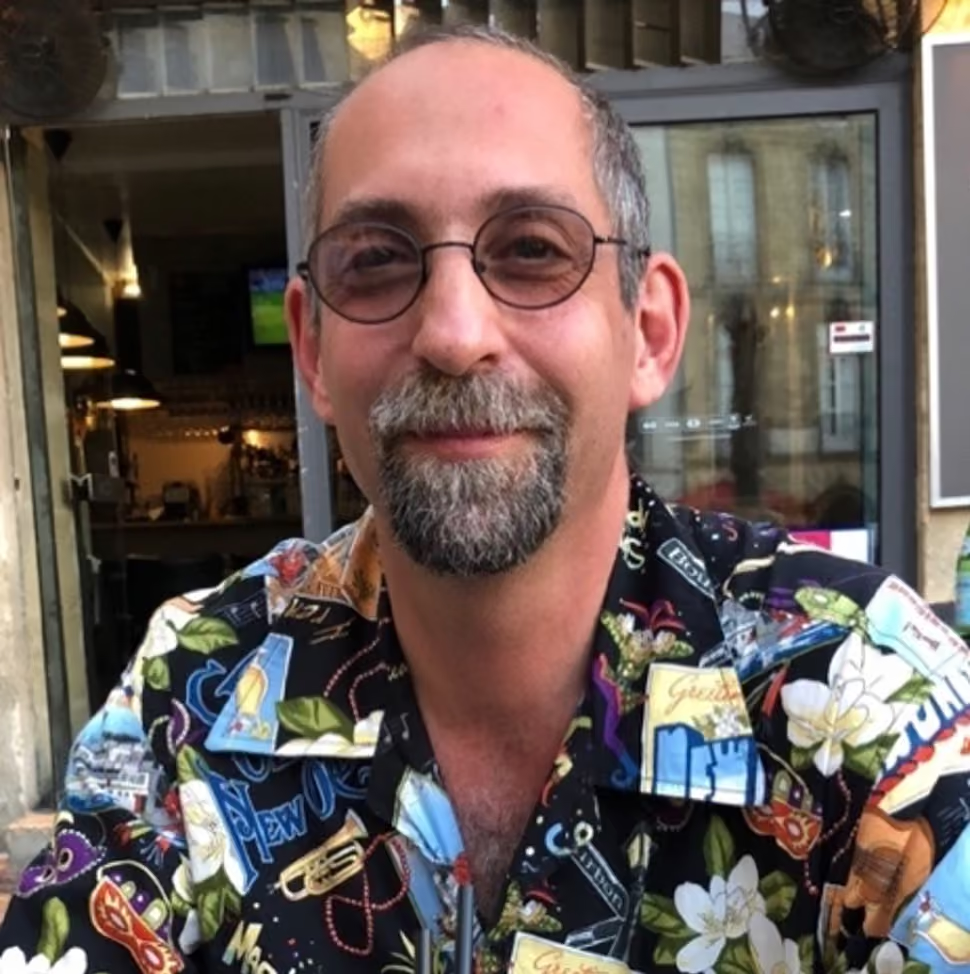
I grew up in Los Angeles, California, attended New York Medical College in Valhalla, New York, and trained in Anesthesiology at NYU in the early 1990s under the great Herman Turndorf, MD, one of a small handful of particularly notable anesthesia program directors in that era.
After completing my training, my primary focus became outpatient and non-traditional operating-room settings, including physician offices and ambulatory surgery centers (ASCs). I kept a part-time hospital practice as well, both to provide balance and to keep my hospital-based skills current.
I have always been curious about how things work. That curiosity was part of what drew me to medicine in the first place. I enjoy taking things apart to understand them better, am mechanically inclined, and have always enjoyed puzzles and figuring out how to fix things using whatever I have on hand. I also tend to look at problems from unconventional angles—to imagine how something might work and then find or combine whatever resources are necessary to make it happen.
I try not to be discouraged
by how difficult it might be to improve on the wheel. Sometimes the better solution isn't to
reinvent the wheel, but to discover something less obvious—like ball bearings—that makes it work better.
Imagination, to me, goes beyond simply picturing something in the mind. It includes resourcefulness, simulations, and the ability to manipulate internally generated information. One book on the power of imagination that I particularly recommend is
Imagine That by Cassandra Vieten
.(1)
Much of my career has involved providing anesthesia in settings where there was no other anesthesiologist immediately available for backup—a luxury my hospital-based colleagues usually enjoy. I learned to function independently, to create my own backup systems and safety nets, and, most importantly, to develop the judgment necessary to anticipate and prevent problems before they occurred.
For approximately 12 years, I ran my own independent anesthesia practice, providing equipment and supplies, managing scheduling and logistics, and handling my own billing while servicing a variety of physician practices. Eventually, local market forces made that model increasingly difficult for a single independent practitioner who was not particularly business minded.
For the past seven years, I have worked with an anesthesia group serving more than 100 physician offices and ambulatory surgery centers throughout the New York metropolitan area. My practice has included Urology, Orthopedics, Ophthalmology, Plastic Surgery, Gynecology, Dental procedures, and Pain Management, ranging from light sedation to full general anesthesia. My skills lay in the art of sedating patients enough to prevent movement while maintaining adequate spontaneous respiration & stable hemodynamics, then going home happy after discharge. I can not predict the future, but I have gotten very good at projecting the present
into the future to anticipate & avoid problems.
After more than 30 years in practice, I like to say that my particular area of clinical expertise lies in the region between consciousness and apnea.
[1] Vieten C (2026).
Imagine That. Simon & Schuster
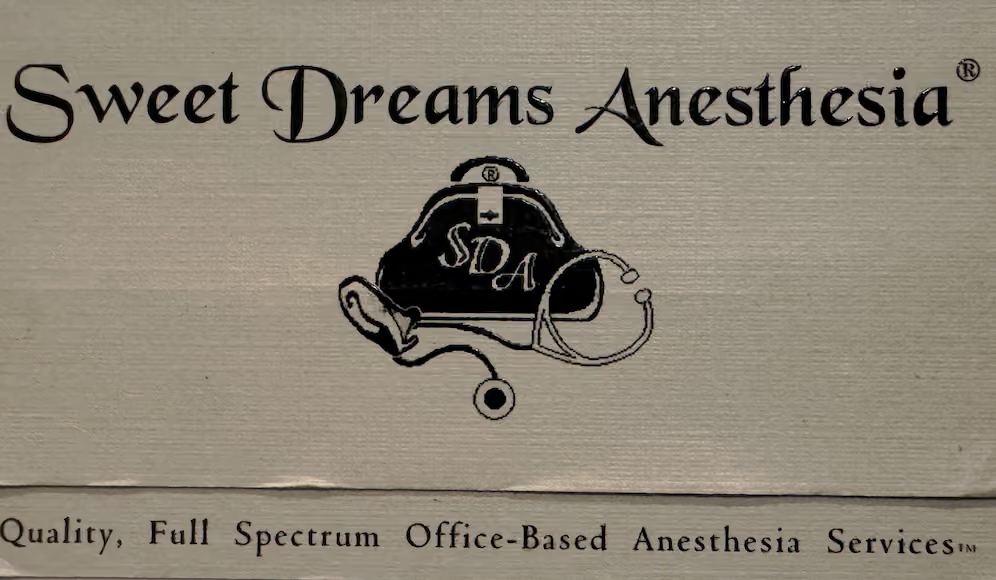
This is the business card I shared with colleagues during the years I ran my own independent anesthesia practice. Its logo and company name reflect that chapter of my career.
Bibliography:
Peer-Reviewed Publications:
Early online publications:
A Safe and Effective Anesthetic Regimen for Outpatient Dry-Table Lithotripsy
Educational Synopses in Anesthesia & Critical Care Medicine, Vol 5, #1, 1/1998. Langer R, Miller S.
Post-Operative Nausea and Vomiting: Literature Review with Treatment Recommendations
Educational Synopses in Anesthesia & Critical Care Medicine. Vol. 3, #1, Jan. 1996.
also in the Global Textbook of Anesthesia, Gasnet, 1996.
Langer R.
Anesthesia and the Sleep Apnea Patient
Langer R. Global Textbook of Anesthesia, Gasnet, 1995.
Anesthetic Considerations in the Morbidly Obese Patient
Langer R. Global Textbook of Anesthesia, Gasnet, 1995.
Anesthetic Management of the Pre-Eclampsia
Langer R. Global Textbook of Anesthesia, Gasnet, 1995.
NOTE: The Global Textbook of Anesthesiology and Educational Synopses in Anesthesia & Critical Care Medicine were early online medical publications hosted by GASNet in the 1990s. The original websites are no longer maintained, and links to these contributions are no longer readily available. The citations are included here as part of the author's publication history.